

Editorial update — October 4, 2026: O gráfico apresenta uma hipótese de transmissão de experiências anteriores. Associações humanas não demonstram, por si, herança germinal epigenética através de gerações não expostas.
Two theories, Darwin’s Theory of Natural Selection and the Central Dogma, have dominated our thinking about evolution and genes for the last 50 years. The Theory of Natural Selection holds that variants arise in the population through random mutation, and that these variants are the substrate for selective pressures that enable new life forms to emerge. The Central Dogma concerns the transfer of biological sequence information: it does not define the gene as the basic unit of genetics. The Modern Synthesis, which combined Darwinian evolution with Mendelian inheritance and population genetics rather than with the Central Dogma, holds that changes in genes that arise through mutations, most commonly single base mutations, are the sources of the variation upon which natural selection operates. This view is very much centered on the primacy of the gene. Gene primacy is expressed in the famous maxim of Beadle and Tatum, “one gene, one enzyme”. The gene-centric view has led to searches for individual genes that cause diseases, the notion that individual genes can be selfish, and even the proposal that individual genes can account for specialized human traits such as language.
Several factors limit the rate at which evolution can proceed by this mechanism. One is the rate at which random mutations can create variants that have a selective advantage. This rate is likely to be low because mutations can be deleterious, neutral or beneficial, with their effects depending on sequence and context. A second factor is the rate at which selection operates, even when variants with advantage come into existence through mutation.
Evolution by the mechanism of the New Synthesis can operate advantageously when environmental pressures are low or increase gradually. These circumstances arise when the environment is stable. In this case, evolution takes place through competition between individuals. The Modern Synthesis is not identical to gradualism and does not require environmental stability or uniformly slow evolutionary change.

Editorial update — October 4, 2026: Charge sobre mudanças de comportamento; a evolução humana não é uma escada linear de espécies que se transformam umas nas outras.
However the environmental pressures are not always low, and in some cases can be strong and can increase rapidly. If the environment is rapidly changing, gradualism may evolve new life forms too slowly to ensure effective competition. Of course, changes in the natural environment, such a climatic changes, can create new selective pressures. However, one novel example of a rapidly changing selective pressure is societal pressures that are exerted through the rapid pace of human social and cultural evolution. As humans evolved from societies of hunting and gathering to agricultural ones, and then to urban societies, the demands upon the brain and nervous system increased immeasurably. Genetic evolution can involve coordinated changes at many loci and selection on existing variation. The suggestion that genetic evolution was inadequate to meet changing social demands remains an interpretive hypothesis, not a demonstrated consequence of the Modern Synthesis.

An alternative mechanism for evolution, the Lamarckian mechanism, holds that characteristics acquired from the environment can contribute to inheritable changes and hence to evolution. Classical inheritance of acquired traits was challenged by evidence about heredity; the Central Dogma itself does not prohibit environmental regulation of genes or epigenetic mechanisms. Weismann posed the major criticism of Lamarckian theory. Weismann’s dogma stated that gametes and somatic cells are separate. This historical distinction does not mean that physiological or environmental signals can never influence germ cells; such influence alone does not demonstrate inheritance across unexposed generations. Without such an influence, the characteristics acquired by the soma cannot be transferred to the gametes and hence cannot be inherited.
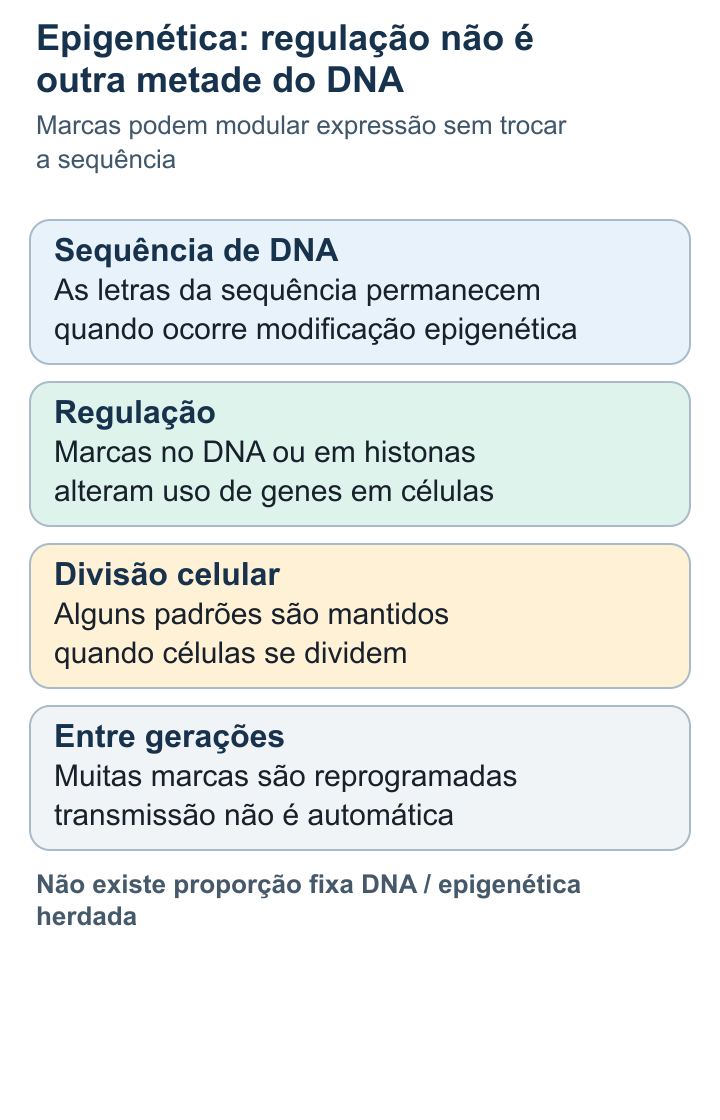
New evidence however has opened a window within which Lamarckian evolution can operate. This window arises from our modern understanding of epigenetics and mechanisms of human development. The science of epigenetics holds that heritable changes in gene function and expression can arise without the occurrence of mutations of the sort that fuel Darwinian evolution. Epigenetic changes involve the placement of small modifications of DNA base structure called marks, which alter DNA function without changing the DNA base sequence. Epigenetic marks can also involve chemical modifications of the histone proteins that package DNA. These marks do not alter the structure of the protein that is encoded by a gene. Instead they alter the level of expression or the circumstances under which the gene is expressed. Thus they do not suffer the limitation of Darwinian evolution imposed by its reliance on random mutation, which is that most mutations are deleterious. Also epigenetic mechanisms can affect the expression of many genes of an organism in a single generation, while genetic adaptation can also involve many loci and pre-existing variation. Epigenetics therefore provides a new view of the gene. The gene is not the primary unit of genetics; instead it is but one component of a larger system that controls organism function.

During development, specifically during gametogenesis or the early stages of embryogenesis, the soma of the mother can potentially influence the genes of the mothers’ gametes or the genes of the developing embryo epigenetically.

Editorial update — October 4, 2026: Fatores ambientais e alterações epigenéticas são investigados em contextos específicos; as setas não estabelecem causalidade universal ou transmissão germinal humana.
Barbara McClintock discovered mobile genetic elements that can change genomic organization and gene activity; transposition may alter DNA sequence and is not simply a sequence-preserving epigenetic mark.
In gene imprinting, epigenetic mechanisms alter the level of expression of the maternal gene copy relative to the expression of the paternally inherited gene. Through imprinting, a parent is able to influence the level of expression of the gene copy that it provides to its offspring separately from the regulation of the same gene from the other parent. Catherine DuLac of Harvard has suggested that imprinting may represent a competition between the two parents. Each parent is struggling to optimize the offspring for its own purposes. The father may through imprinting exert a pressure that leads to greater numbers of offspring, while the mother may use imprinting to exert a pressure that makes the development or nurturing of the embryo compatible with the health of the mother. Imprinting is epigenetic because it imposes heritable changes on gene expression without altering the primary DNA sequence of the gene.
[The historical infographic was replaced because its fixed genetic/epigenetic proportions and inheritance claims were unsupported.]
What sorts of factors could lead to epigenetic changes transmitted from the environment of the mother to the gene expression program of the offspring and its descendents? One is stress, a second is levels of nutrition, a third is the influence of drugs, and another is the health of the mother, for example whether the mother has suffered viral or bacterial infections during gestation. Stress and disease trigger can release powerful hormones that may influence the developing embryo.
The Dutch Hunger Winter study found persistent differences in IGF2 methylation among people exposed around conception, compared with unexposed siblings. It supports an association with prenatal exposure, not proof that the same marks were transmitted through unexposed generations.
Animal experiments have reported epigenetic and behavioral effects of parental cocaine exposure. Maternal exposure can directly affect the fetus and its developing germ cells, so an effect in offspring is not by itself proof of transgenerational inheritance in humans.
Animal studies of maternal diet or obesity suggest effects on offspring metabolism; extrapolation to inherited caloric intake across unexposed human generations remains uncertain.

This notion of epigenetic, heritable reprogramming, which is Lamarckian at heart, suggests a new relationship between environment, mother and developing child. Maternal physiology can influence development through several mechanisms, including epigenetic regulation. The idea that this necessarily prepares descendants adaptively for adversity is a hypothesis; it does not imply maternal intention or responsibility for an offspring’s illness. The author’s broader argument concerns environmental and social responsibility. Epigenetic regulation does not overturn the Central Dogma, and its contribution to human transgenerational inheritance must be assessed separately from its established role within exposed individuals. They also have had a large impact on social policy. Epigenetics place a new light on the consequences of the environment for the well being of future generations. Now that we appreciate that hazardous or deleterious environments can have long-term consequences for future generations, such conditions can no longer be tolerated.

Sources consulted for the 2026 review
- Crick1970 Central Dogma
- Modern Synthesis — University Wisconsin course
- Alberts Molecular Biology of Cell chapter7 Berkeley
- The genetics of human adaptation: hard sweeps, soft sweeps, and polygenic adaptation.
- Transgenerational epigenetic inheritance: myths and mechanisms.
- McClintock Nobel lecture
- Persistent epigenetic differences associated with prenatal exposure to famine in humans.
- Maternal cocaine administration in mice alters DNA methylation and gene expression in hippocampal neurons of neonatal and prepubertal offspring.
- Epigenetic inheritance of phenotypes associated with parental exposure to cocaine.